

Certificate Lifecycle Management: Importance, Stages & Best Practices
Businesses often use multiple certificates, which can make it difficult to track, causing downtimes, security breaches and high costs. But, by using certificate lifecycle management, businesses can make sure the certificates are
- Correctly created and issued
- Installed in the right place
- Regularly monitored
- Timely renewed before they expire
- Remove any unwanted certificates
In other words, Certificate Lifecycle Management (CLM) is an intensive process of managing an organization’s digital certificates. During this process, all the certificates are handled from their creation to expiration to ensure secure communication between the users and systems.
Why Certificate Lifecycle Management is Important
1. Prevents Website Downtime
On expiration of the certificates, the website shows security warnings that stop the users from opening your site. To avoid this, CLM notifies businesses about the expiration of certificates.
2. Protects Sensitive Data
CLM helps businesses in securely managing the certificates. These certificates store encrypted data, making it important to properly manage.
3. Builds Customer Trust
A sense of trust is built for websites that show a secure connection. Regularly checking over the certificates can help improve brand authority and image.
4. Supports Compliance
Industries are strictly required to follow the security practices to protect user data. CLM helps them to comply with these standards to avoid any fines or penalties.
Key Stages of Certificate Lifecycle
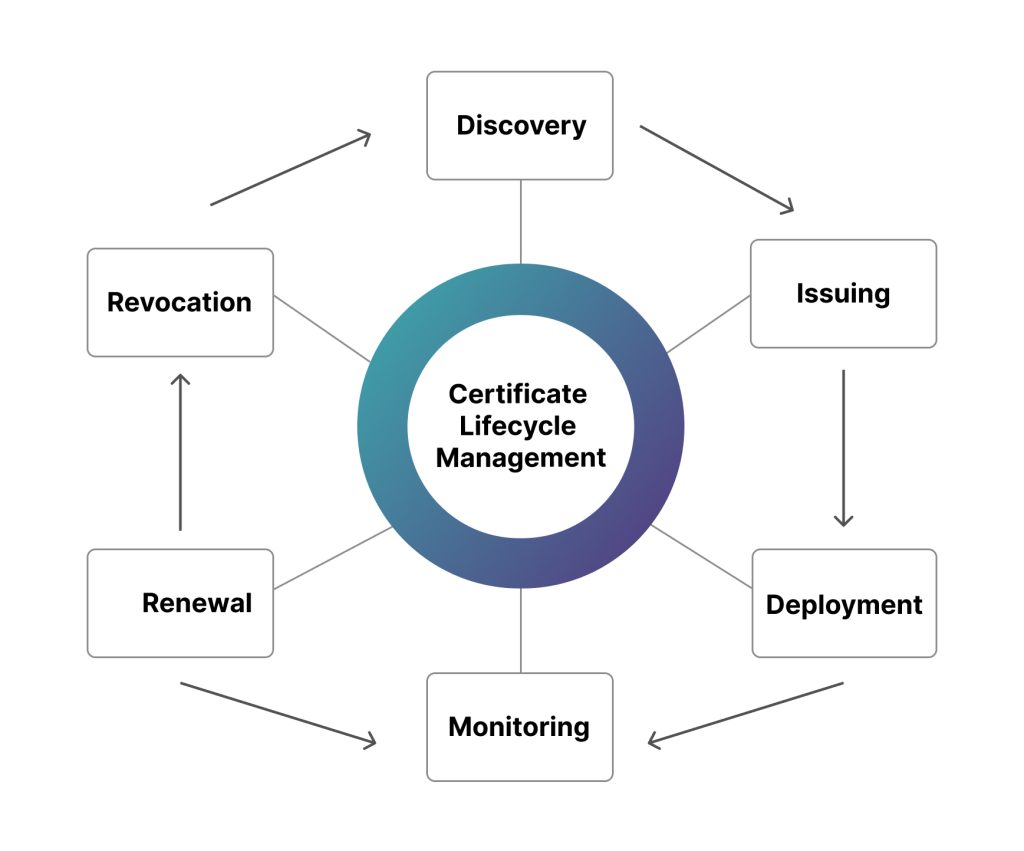
Discovery
Most businesses don’t even know how many certificates they have. So, the first stage involves identifying the certificates that an organization has. This will help find out where the certificates are stored and what their expiration status is.
Issuing
Now you can start requesting the required certificate. Businesses can get the certificate from the certificate authority (CA) like AppleShineTech. It involves creating a private key and submitting it to the CA to get a signed certificate.
Deployment
Once the certificate is issued, businesses need to carefully install it in the place where they want. This can be a server, an email system or an application. Wrong implementation can result in problems similar to the case of not having a certificate.
Monitoring
The certificate needs to be constantly monitored to get crucial information like their working status, expiration and vulnerability. This helps businesses know if there is any problem with the certificate.
Renewal
Most certificates are usually valid for one to two years. This makes it important to timely renew these certificates. This can be done by submitting a new request for the certificate to the CA.
Revocation
Revocation involves cancellation of the certificate before it expires. It happens if the certificate is compromised or no longer needed by the organization.
Common Mistakes Businesses Make with Certificate Management
Many businesses make mistakes when managing their certificates. Here are some common mistakes:
- Manually tracking certificates via spreadsheets
- Forgetting renewal deadlines
- Weak management of encryption keys
- Managing various certificates across systems
These mistakes can lead to downtime, data breaches and compliance failures. Therefore, avoiding such mistakes can help in the management of the certificates.
Best Practices for Certificate Lifecycle Management
Full Audit
Start by having a complete audit of the entire system and find every certificate that is being used. Write down their expiration date and assign responsibility for their renewal.
Use Automation Tools
Manually managing the certificates is time-consuming and is prone to human error. Using automation tools can help businesses save time with the management and renewals of the certificates.
Protect Your Encryption Keys
Certificates are dependent on the keys behind them. It is important to have strong key management that securely generates, stores and rotates the encryption keys so that they can’t be misused.
Centralize Certificate Management
The certificates should not be scattered around multiple systems. There should be a centralized place where one can clearly see all the certificates and manage them.
Review and Update Regularly
There should be a regular check over the certificates to find any problem or issues. This helps in maintaining the overall security of the certificates.
How AppleShineTech Helps with Certificate Lifecycle Management
Handling certificates is a crucial task for any business. The more systems a business has, the more certificates they need to track. Hence, having the assistance of an experienced technology partner is a great option one can choose.
At AppleShineTech, we help in simplifying the certificate lifecycle management with our advanced security solutions. This includes implementation of certificate lifecycle management solutions to alert you about your certifications and their expiry dates. Moreover, we also provide HSM solutions and key management solutions to secure your keys. You can explore all these solutions on our website, AppleShineTech.
Conclusion
In conclusion, certificate lifecycle management (CLM) is a critical part of modern cybersecurity. Absence of CLM can lead businesses to face problems such as downtimes, data breaches and compliance.
By understanding the lifecycle stages and using the right tools, businesses can easily manage their certificates. Additionally, using powerful key management and HSM solutions can help businesses build a secure framework.
FAQs
1. What is Certificate Lifecycle Management?
Certificate Lifecycle Management (CLM) is a process of managing the digital certificates of the business. It helps in tracking, renewing and securing every certificate that a business uses.
2. How do I know when my certificates are about to expire?
The easiest way is to use an automation tool that monitors the certificates and notifies you about their expiration.
3. What happens if a digital certificate expires?
If a digital certificate expires, it is no longer considered valid. This will make your website connection unsecure, preventing users from visiting your site.
4. Why is it important to protect encryption keys?
Encryption keys help in making your certificates secure. Misuse or exposure of these keys can compromise your entire security system.
5. Why is SSL certificate lifecycle management important?
SSL certificate lifecycle management can help businesses secure their website connection. Moreover, it also helps in avoiding issues related to data breaches and certificate expiry.